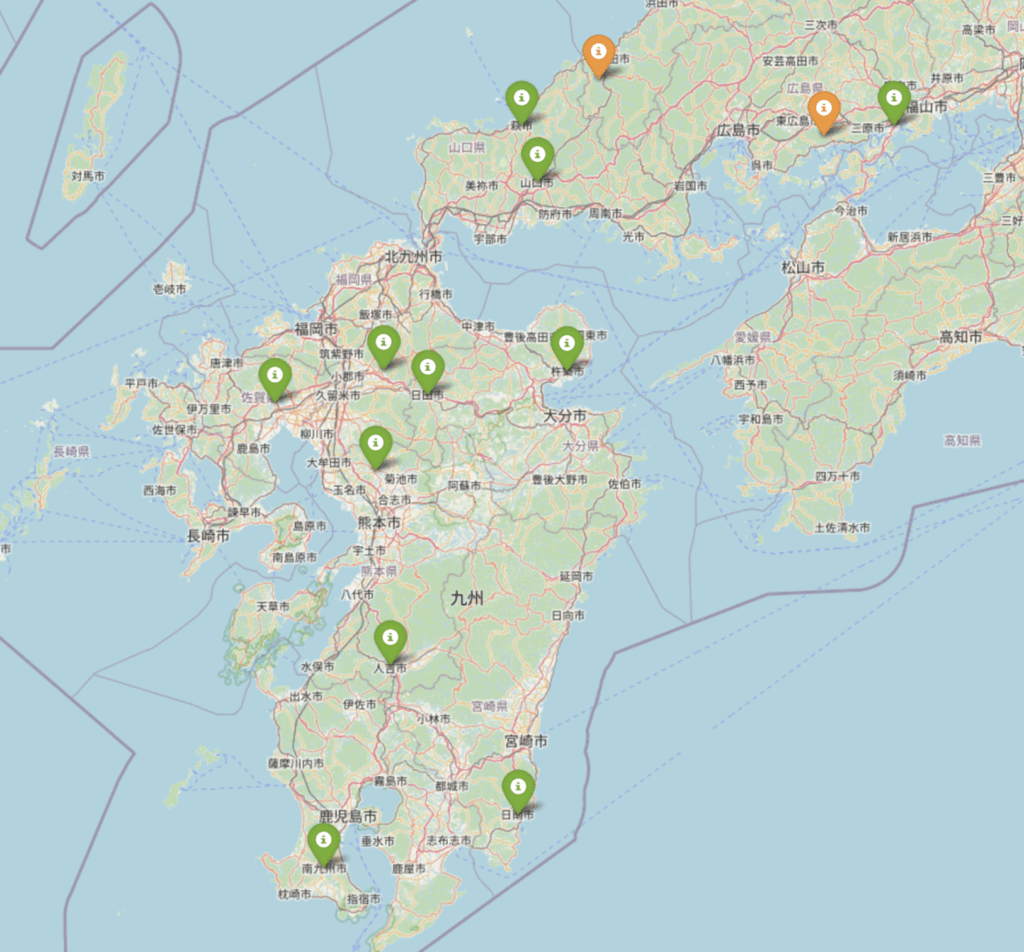
| 地名 | 呼ばれ方 | 小京都らしい理由・特徴 |
| 福岡県朝倉市(秋月) | 筑前の小京都 | 秋月藩の城下町。碁盤目状の町割り、黒門や長屋門、武家屋敷跡が残る。紅葉の名所も京都的。 |
| 佐賀県小城市 | 肥前の小京都 | 鯉料理や羊羹など京風の食文化、祇園祭を受け継ぐ。歴史ある水路や土蔵が町並みに残る。 |
| 熊本県山鹿市 | 豊前街道の小京都 | 豊前街道の宿場町として栄え、千年以上続く山鹿灯籠まつりや芝居小屋「八千代座」が京文化を思わせる。 |
| 熊本県人吉市 | 人吉の小京都 | 相良氏700年の城下町。人吉城跡や寺町、石橋群、球磨川の景観が京風情を残す。 |
| 大分県日田市 | 豊後の小京都 | 江戸期の天領で、京風の商人文化が栄えた。豆田町に白壁土蔵や町家が残り、祇園祭も開催。 |
| 大分県杵築市 | 杵築の小京都 | 高台に武家屋敷、低地に商人町が残り、城下町の町割りがほぼそのまま。石畳の坂道が京町を思わせる。 |
| 宮崎県日南市(飫肥) | 飫肥の小京都 | 飫肥藩5万石の城下町。飫肥城跡、武家屋敷通り、飫肥杉の門構え。京文化を映した藩校や庭園も残る。 |
| 鹿児島県南九州市(知覧) | 薩摩の小京都 | 武家屋敷群と庭園が現存。石垣と生垣の景観が美しく、江戸期の薩摩藩の京都的城下町の典型。 |
| 広島県尾道市 | 尾道の小京都 | 寺院が多く「西国寺・千光寺」など古刹が町並みに点在。坂道と海の景観が調和し、文学や映画の舞台としても京都風情を感じさせる。 |
| 山口県山口市 | 西の京・山口 | 大内氏が京文化を取り入れて栄えた城下町。瑠璃光寺五重塔、常栄寺庭園など「京を模した町づくり」で知られる。 |
| 山口県萩市 | 萩の小京都 | 毛利氏の城下町。萩城下町には白壁の土蔵や武家屋敷が残り、碁盤目状の町割りも保存されている。明治維新ゆかりの町として文化的価値も高い。 |
| 島根県津和野町 | 山陰の小京都 | 石畳の道、白壁の町並み、掘割を泳ぐ鯉、太鼓谷稲成神社などがあり、落ち着いた風情が「山陰の小京都」と称される。森鴎外や西周など文化人のゆかりの地でもある。 |
| 広島県竹原市 | 安芸の小京都 | 江戸時代の製塩業で栄えた町。町並み保存地区に、白壁土蔵、格子戸の町家が整然と並ぶ。京都風の町割りや寺院群も残り、古都の雰囲気を漂わせる。 |
秋月藩の城下町。碁盤目状の町割り、黒門や長屋門、武家屋敷跡が残る。紅葉の名所も京都的。
The castle town of the Akizuki domain. Town division of grid pattern. Kuro-Mon, Nagaya-Mon and samurai houses remain. Good view for maple red leaves, like Kyoto.
鯉料理や羊羹など京風の食文化、祇園祭を受け継ぐ。歴史ある水路や土蔵が町並みに残る。
Kyoto-like food culture such as carp dish and yokan sweet paste. The Gion festival came down. The historical town view with creeks and clay storehouses.
豊前街道の宿場町として栄え、千年以上続く山鹿灯籠まつりや芝居小屋「八千代座」が京文化を思わせる。
Flourished as a post town on Buzen Road. Yamaga Lantern Festival with 1000-year history and the theater house ‘Yachiyoza’might be associated with Kyoto culture.
相良氏700年の城下町。人吉城跡や寺町、石橋群、球磨川の景観が京風情を残す。
The castle town of the Sagara Lord family with 700 year history. Has some Kyoto atmosphere given by the remains of the Hitoyoshi castle, Temple town, group of stone bridges, and the River Kuma.
江戸期の天領で、京風の商人文化が栄えた。豆田町に白壁土蔵や町家が残り、祇園祭も開催。
Was a Tenryo district, which was directly ruled by the Edo shogunate. Merchant culture like that in Kyoto flourished. Clay storehouses with white walls and merchant houses are preserved in Mameda Town. Hold the Gion Festival.
高台に武家屋敷、低地に商人町が残り、城下町の町割りがほぼそのまま。石畳の坂道が京町を思わせる。
There remain samurai houses in the higher part and merchant houses in the lower part. Remains the town division typical to castle towns. The stone slope reminds us of Kyoto town.
飫肥藩5万石の城下町。飫肥城跡、武家屋敷通り、飫肥杉の門構え。京文化を映した藩校や庭園も残る。
The castle town of the Obi domain of 50 thousand koku. The remain of the Obi castle, streets for samurai houses, the gates made of Obi cyders. The samurai school and Japanese gardens representing Kyoto culture.
武家屋敷群と庭園が現存。石垣と生垣の景観が美しく、江戸期の薩摩藩の京都的城下町の典型。
Samurai houses and their gardens remain. Has a beautiful view of stone walls and hedges. Typically, a castle town of the Satsuma domain like Kyoto town,
寺院が多く「西国寺・千光寺」など古刹が町並みに点在。坂道と海の景観が調和し、文学や映画の舞台としても京都風情を感じさせる。
There spread a lot of temples including traditional temples with dignity such as Saikokuji and Senkojo. Has a good harmony of slopes and seascapes. Staged for literature works and films, for its Kyoto-like atmosphere.
大内氏が京文化を取り入れて栄えた城下町。瑠璃光寺五重塔、常栄寺庭園など「京を模した町づくり」で知られる。
Flourished as the castle town due to the adaption of Kyoto cultures by the Ouch lord family. Five story pagoda at Rurikoji temple and the Japanese gardenat Joei temple. Known as the town imitating the view of Kyoto.
毛利氏の城下町。萩城下町には白壁の土蔵や武家屋敷が残り、碁盤目状の町割りも保存されている。明治維新ゆかりの町として文化的価値も高い。
The castle town of the Mori family. White-walled clay storehouse, samurai residences, its grid-shaped town division are preserved. Culturally valuable as the town deeply related to the Meiji Reformation.
石畳の道、白壁の町並み、掘割を泳ぐ鯉、太鼓谷稲成神社などがあり、落ち着いた風情が「山陰の小京都」と称される。森鴎外や西周など文化人のゆかりの地でもある。
Stone-paved streets, the town view with white walls, carp swimming in the water gutter, Odaiko Inari shrine. The serene atmosphere makes it called ‘Little Kyoto in the Sanin Area. Mori Ogai and Nishi Amane are related to this town.
江戸時代の製塩業で栄えた町。町並み保存地区に、白壁土蔵、格子戸の町家が整然と並ぶ。京都風の町割りや寺院群も残り、古都の雰囲気を漂わせる。
Flourished as the town producing salt during the Edo period. In the town-view preservation district are lined white-walled storehouses, town people’s residences with a lattice-patterned gate door. The town division which looks like that in Kyoto and the group of temples make the atmosphere of the old capital.