Usuki Stone Buddhas (Buddha figures carved in rock)
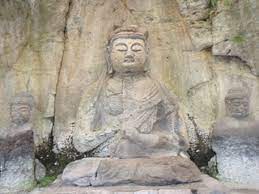
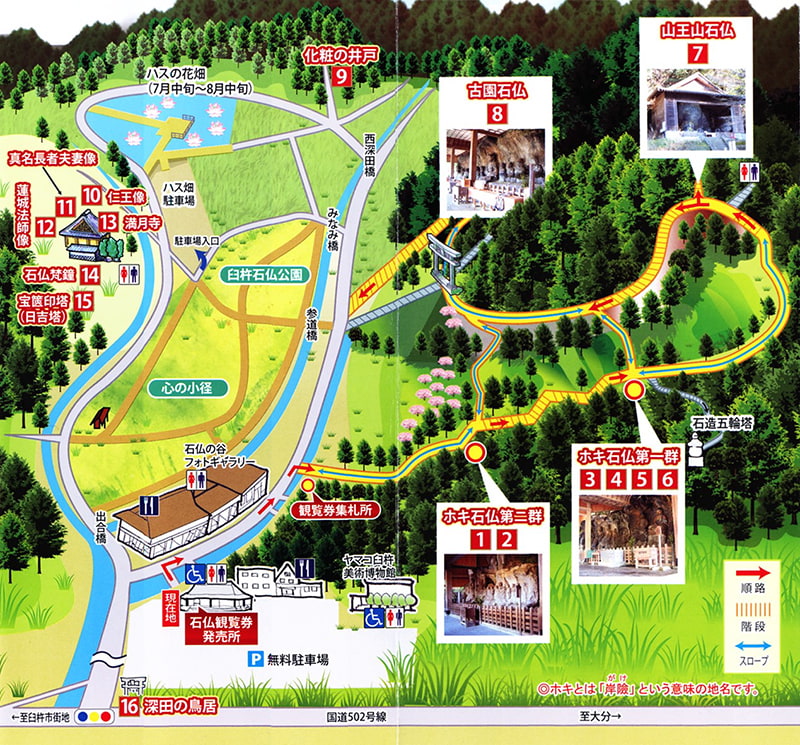
The Usuki Stone Buddhas are Buddhist figures carved directly into rock faces (magaibutsu) in Usuki City, Ōita Prefecture, and have been designated a National Treasure of Japan.
More than 60 figures were carved into a cliff of hardened volcanic ash from eruptions of Mount Aso in Kumamoto Prefecture approximately 90,000 years ago.
The carvings are believed to date from the Heian period (794–1185) to the Kamakura period (1185–1333), though their creators and exact purpose remain unknown. They continue to hold many mysteries.
All of the Buddha figures are carved directly into the rock and are immovable. For roughly 1,000 years, they have watched over the area from the same location.
In June 1995, these magnificent carvings were recognized as Japan’s first magaibutsu (rock-carved Buddhas) to be designated a National Treasure.
The Usuki Stone Buddhas are highly valued internationally as cultural heritage due to the large number of figures, their artistic beauty, and the sophisticated carving techniques used on such hard rock surfaces.
(Magaibutsu refers to Buddhist images carved directly into natural rock faces.)
More about Buddhism , Click here. More about Buddha Statues , Click here.
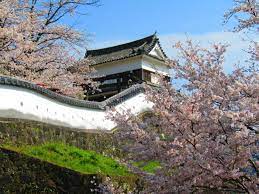
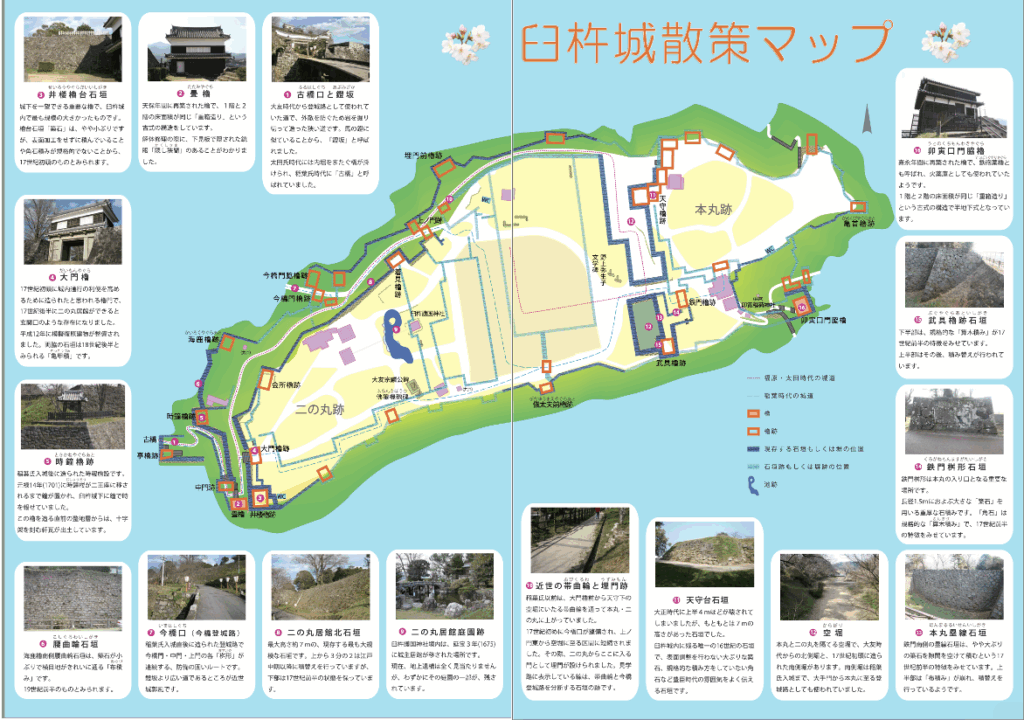
The Ruins of Usuki Castle
This was the former residence of the Christian samurai lord Sōrin Ōtomo. As a result, alphabet-like letters were carved into the stone walls, and the castle contained a chapel, while the surrounding town had a Christian school. When constructed, the castle was located on an island called Nibu-shima, forming a natural fortress with strong defenses due to the surrounding sea.
After the Ōtomo family, the Inaba family took over the Usuki domain and ruled for 15 generations. Following the Meiji Restoration, the castle was dismantled.
It was built on Nibushima and, due to its shape, was also known as Nibushima Castle or Turtle Castle.
The Honmaru and Ninomaru areas have been developed into a city park featuring two towers, a reception hall, and a garden, serving as a leisure space for local residents. In spring, it is a popular spot for cherry blossom viewing.
More about Japanese Castles , Click here. More about Sakura , Click here.