Daikanbo
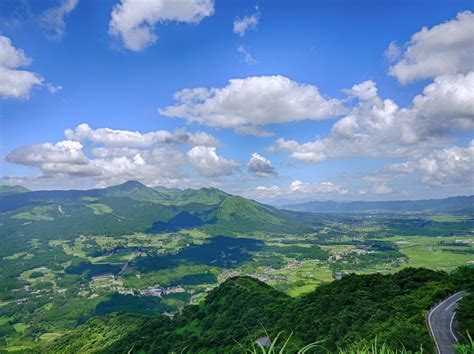
Daikanbo is the highest spot on the rim of Mount Aso, with an elevation of 939 meters. From here, you can see all five volcanic cones of Aso at once. The view is said to resemble a reclining Buddha. The area was formerly known as Tōmi Gahara but was renamed Daikanbo by the famous journalist Tokutomi Sohō during his visit, as he was deeply impressed by the scenery. On a clear autumn morning, you might witness a sea of clouds.
Kusasenri
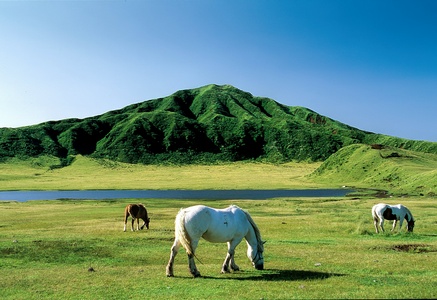
Kusasenri is a green field that stretches about one kilometer across the northern slope of Eboshi Cone. It is the remnant of a double volcanic crater and features a pond at its center. The peaceful scene of horses grazing calmly against the backdrop of the steaming Nakadake Cone is one of the classic views of Aso.
Crater of Nakatake
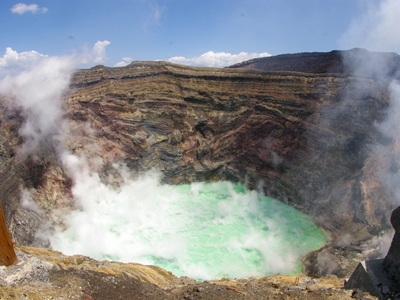
This is the crater of the active Naka-dake Cone. Around the rim of the smoking crater, you can enjoy dramatic views of the rugged volcanic landscape. The site is accessible via a toll road, by ropeway, or on foot. Note that access may be restricted depending on volcanic activity.
Shirakawa Suigen
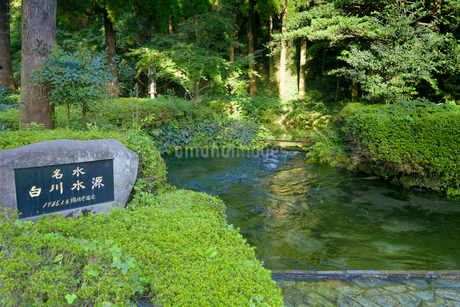
The Shirakawa district in Minami Aso Village, surrounded by Mount Aso and its southern rim, is known for its many natural springs. The Shirakawa River flows northwest along the southern edge of the village toward the distant Ariake Sea. Its source is Yoshimi Shrine, which boasts the largest spring in the district, with a daily discharge of ninety thousand tons. The water remains at a constant temperature of 14°C (57°F) year-round and is so clear that you can see it bubbling up from the sandy bottom.
It is considered ideal for brewing tea, and many people visit to collect the water. It is also used in sake production and bottled as drinking water, contributing significantly to the local economy. The spring is designated as one of Japan’s “100 Best Waters.”
Takamori-Yusui-Tunnel- Park
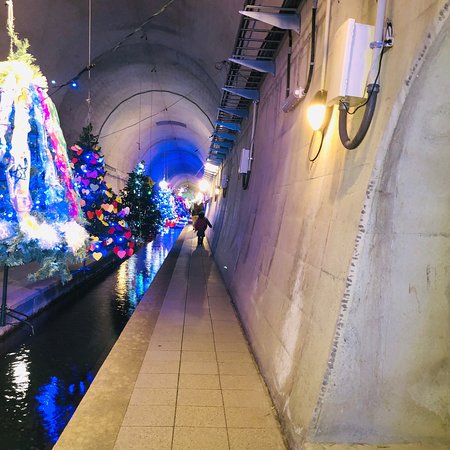
Takamori Yusui Tunnel Park features a spring that produces 32 tons of water per minute. The tunnel interior has a striking, almost magical atmosphere, with popular photo spots and a “Water Pearl”—a device that creates artificial water droplets. The park hosts events year-round.
Aso Shrine
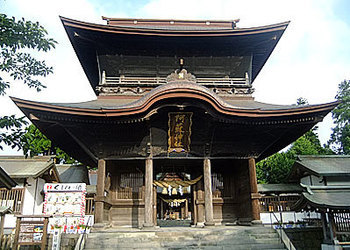
Aso Shrine, located in Kumamoto Prefecture, is the principal shrine of the former Higo Province. It enshrines Takeiwatatsu-no-mikoto, the mythical pioneer of the Aso region, along with twelve other deities. The shrine complex includes three sacred halls, a prayer hall, and an entrance gate, all contributing to its majestic and solemn atmosphere. It sustained extensive damage in the 2016 Kumamoto earthquakes.
Isshingyo Sakura
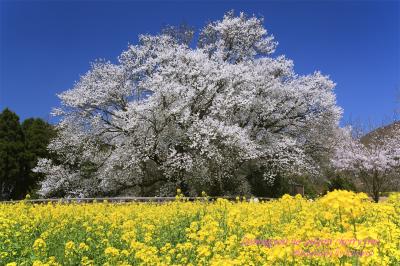
The 400-year-old Isshingyo cherry tree in Aso is a yamazakura (mountain cherry) variety. It was planted as a memorial for Tadafuyu Nakamura, who died in battle four centuries ago. His family performed rituals with profound devotion—isshin meaning “wholehearted” and gyō meaning “ascetic practice”—giving the tree its name.
The tree is especially popular in spring, when its pink blossoms create a striking contrast with the surrounding yellow canola flowers. In a survey of favorite cherry blossom spots in Kyushu, the Isshingyo tree ranked third, after Maizuru Park and Kumamoto Castle.
More about Sakura , Click here.
Noyaki
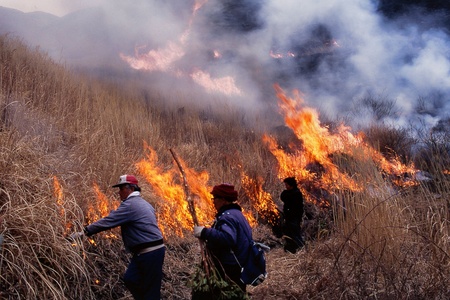
The grass in these pastures is needed to feed cattle in spring and summer and to make hay for winter. However, it does not grow naturally but is cultivated. For centuries, people have practiced field burning to maintain productive pastureland.
The burning helps eliminate harmful insects, such as fleas, and encourages the growth of grass suitable for cattle. Without it, the area would become overgrown with less desirable vegetation and lose its current beauty.
Field burning is a major seasonal event in Aso. Around the spring equinox, a day with a gentle breeze is chosen. Once the fire is set in the fields, which have dried out over the winter, it spreads rapidly across the slopes. It is an impressive spectacle.
Nabegataki Waterfalls
Nabegataki Falls is located in Oguni Town, near Kurokawa Onsen. It is one of the region’s most scenic waterfalls, unique for allowing visitors to walk behind the curtain of falling water and view it from behind. The waterfall was formed by a major volcanic eruption approximately 90,000 years ago.