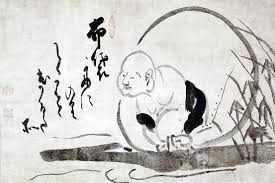
The word Zen refers to the disciplines practiced in Buddhist Zen sects. The original Zen sect was founded by Bodhidharma in China in the 6th century. It was introduced to Japan in the Kamakura period and spread by Eisan and Dogen. It spread as the Rinzai sect and the Soto sect, both of which have developed uniquely in Japan.
Zen is a set of discipline activities whose purpose is to stabilize one’s mind and attain enlightenment. Zen meditation is its basic discipline. It never relies on written teachings or documents. It is called Furyumonji 「不立文字(ふりゅうもんじ)」. The training monks focus their minds only on the present time and place, remove all worldly desires, notice the true self, and accept things as they are.
Other trainings include samu (cleaning and cooking) and koan (questions asked by the master).
The Zen spirit of removing all unnecessary things has deeply influenced Japanese culture, such as the tea ceremony, calligraphy, gardening, and samurai martial arts. Nowadays, as one method of mindfulness and stress management, Zen meditation attracts many people around the world.
禅問答 Zen Riddle
It is one style of training for Zen monks. The master gives disciples a paradoxical question. The disciples are supposed to work out their own answer. It is so difficult to answer that this works as a good philosophical training to attain the enlightenment.
Anyway, it Is tough to answer. One example. The most famous one is this.
The Sound of One Hand.
“If you clap your hands, there’s a sound. What is the sound of one handclapping?”
Each answer they give is nothing. Answering itself is nothing. The logic they use is nothing. The words they use is nothing. The process of thinking is a key. It suggests the truth should be beyond logic. Feel it with your whole body and soul.